
SEAGULL HEALTH
Your health,We care!
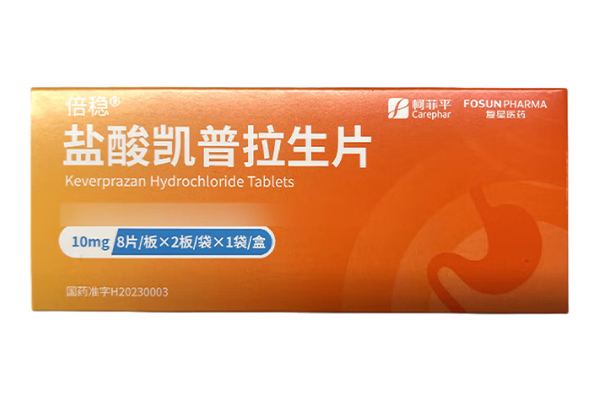
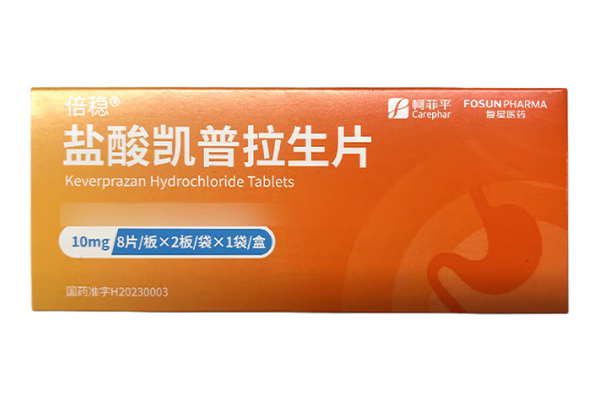
Compared with conventional proton pump inhibitors (PPIs), Keverprazan Hydrochloride Tablets have a faster onset of action, with the onset achievable within 2 hours on the first day of administration, and their gastric acid inhibition effect is more stable and durable.

 AuthenticGuaranteeFast DeliveryPrivacy
 Keverprazan Hydrochloride Tablets is a National Class I Chemical Innovative Drug developed by Jiangsu Carephar Pharmaceutical Co., Ltd. and produced by Nanjing Carephar Shenghui Pharmaceutical Co., Ltd. It was approved for marketing by the National Medical Products Administration (NMPA) in February 2023 and has independent intellectual property rights in China.
Keverprazan Hydrochloride Tablets are mainly indicated for the treatment of two digestive system diseases:
Duodenal Ulcer: Inflammatory lesions occurring in the initial segment of the small intestine.
Reflux Esophagitis: Inflammation caused by gastric acid reflux irritating the esophagus.
Swallow the tablet whole; do not chew or crush it. It is recommended to take this product before breakfast.
Adults: 20mg once daily, for a continuous treatment of 6 weeks.
Adults: 20mg once daily, for a continuous treatment of 8 weeks.
Available data do not support the use of this product for more than 8 weeks.
Keverprazan 20mg twice daily, usually co-administered with amoxicillin 1000mg, clarithromycin 500mg and bismuth potassium citrate 240mg (calculated as bismuth oxide) – all twice daily – for 14 consecutive days.
The following populations are strictly prohibited from using this drug:
1.Patients allergic to any component of this drug;
2.Patients taking atazanavir, nelfinavir, or rilpivirine;
3.Pregnant women or women who may be pregnant.
Based on clinical trial data of 354 adult patients (involving patients with duodenal ulcer and reflux esophagitis), the following reactions are common when taking 20 mg daily (sorted by frequency of occurrence):
Hepatobiliary System: Common: abnormal liver function; Uncommon: drug-induced liver injury.
Gastrointestinal System: Common: gastric polyps, diarrhea; Uncommon: constipation, abdominal pain, nausea, duodenitis, etc.
Metabolic Abnormalities: Common: elevated blood lipids and uric acid; Uncommon: abnormal appetite.
Cardiovascular System: Common: arrhythmia, bradycardia; Uncommon: heart block.
Abnormal Examination Indicators: Common: elevated transaminases, positive urinary protein; Uncommon: abnormal liver function indicators, changes in blood cell count, etc.
Other Reactions: Uncommon: dizziness and headache, allergic dermatitis, epistaxis (nosebleed), abnormal urinary system, etc.
Pregnancy
No clinical data on the use of this product in pregnant women are available. Keverprazan Hydrochloride can cross the placental barrier. Unless the expected therapeutic benefit is considered to outweigh any potential risks, pregnant women or women who may be pregnant should not take Keverprazan Hydrochloride Tablets.
Lactation
To date, no clinical studies have been conducted to evaluate this product in lactating subjects. It is not clear whether Keverprazan Hydrochloride is excreted into human milk. Animal studies have shown that Keverprazan Hydrochloride can be secreted into milk.
The use of Keverprazan Hydrochloride should be avoided during lactation. If administration is necessary, breastfeeding should be discontinued first.
This trial has not been conducted and there are no reliable references.
Clinical experience with this product in elderly patients is limited. In two Phase III trials for the treatment of duodenal ulcer and reflux esophagitis, 7 and 16 elderly patients (≥65 years old) received Keverprazan Hydrochloride 20 mg once daily, respectively. The endoscopic healing rate, incidence of adverse events, and common adverse reactions in elderly patients were similar to those in the full analysis set.
Due to the decline in overall physiological functions (such as hepatic and renal function) in elderly patients, this product should be used only after assessment.
For more detailed drug information, please consult the official package leaflet.
If any issues arise, please contact us immediately.
Email:haiousales@gmail.com
Copyright 2024 @ haiouhealth.com All right reserved SEAGULL HEALTH


